Why Is Real Time Health Monitoring Becoming Popular?

Time:2026-10-17 Author:Charlotte
0%

Why is real-time health monitoring becoming popular? The answer lies in a visible shift from occasional checkups to continuous, everyday observation. A smartwatch can record a changing heart rate during a morning walk. A wearable patch can detect irregular rhythms while someone sleeps. A glucose sensor can show how breakfast affects the body within minutes. These details give patients and clinicians a clearer view of health patterns, not just isolated measurements.

Dr. Joseph Kvedar, a Harvard Medical School professor and digital-health authority, has said, “The future of health care is in the home.” His statement reflects the growing role of connected devices, remote consultations, and home-based care. Real-time data may help clinicians notice warning signs earlier, support chronic disease management, and reduce unnecessary hospital visits. It also gives patients a stronger role in understanding their own bodies. That can feel empowering.

But the technology is not perfect.

Sensors can produce false alerts. Devices may lose connection. Some users may struggle to interpret complex data. Privacy, affordability, and unequal internet access also remain serious concerns. A number on a screen does not explain every symptom. It cannot replace clinical judgment. This is where responsible implementation matters. Healthcare providers should verify device accuracy, protect personal information, and explain results in plain language. The popularity of real-time monitoring is understandable, but trust must grow alongside innovation. Its value depends not only on faster data, but also on careful decisions, human experience, and reliable medical oversight.
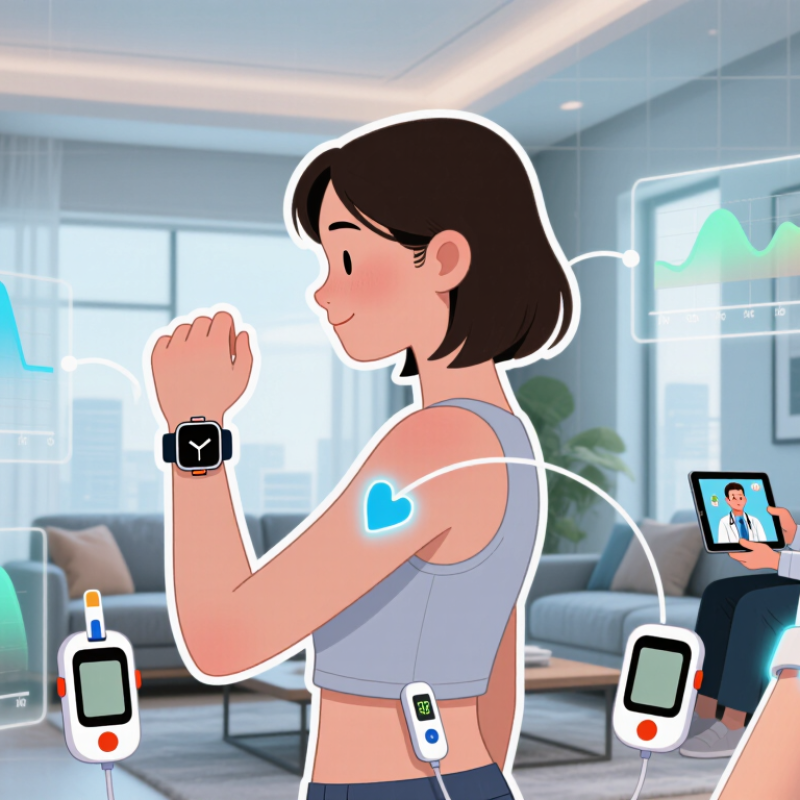
Why Is Real Time Health Monitoring Becoming Popular?

What Real-Time Health Monitoring Means

Real-time health monitoring means collecting and reviewing body signals as they happen. These signals may include heart rate, blood oxygen, skin temperature, movement, sleep patterns, or glucose levels. A sensor records the data, while software detects changes and presents them in a readable form. The goal is not to watch every number obsessively. It is to notice meaningful patterns earlier.

In clinical practice, continuous data can help professionals understand what occasional measurements miss. A short appointment may show one blood pressure reading, but daily tracking can reveal changes linked to sleep, exercise, stress, or medication timing. At home, a person might see an unusual pulse after climbing stairs, then compare it with recovery time. Context matters. One abnormal reading does not automatically indicate illness.

Reliable monitoring still requires careful interpretation. Sensors can lose contact, readings can be affected by movement, and algorithms may produce false alerts. Not perfectly. People may also become anxious when checking data too often. Health information should support informed conversations with qualified professionals, not replace them. Privacy deserves equal attention, because continuous records can reveal intimate routines and vulnerabilities. Real-time monitoring is useful when its measurements are accurate, its limits are understood, and human judgment remains involved.

How Real-Time Health Monitoring Technologies Work

Why Is Real Time Health Monitoring Becoming Popular?

How Real-Time Health Monitoring Technologies Work

Real-time health monitoring combines wearable sensors, mobile connectivity, and clinical software. Optical sensors measure pulse through changing blood flow. Electrical sensors can record heart rhythm. Accelerometers detect steps, falls, and unusual movement. The device sends encrypted readings to a phone or secure cloud platform. Algorithms then compare patterns with personal baselines. A sudden change may trigger an alert for review.

The World Health Organization reports that noncommunicable diseases cause about 74% of global deaths. Continuous data can reveal gradual changes before a clinic visit. A 2024 report from the International Data Corporation also indicates strong growth in connected health devices, driven by remote care and aging populations. Yet, more data does not always mean better care. Sensors can slip, batteries can fail, and algorithms can misread normal variation. I have found that context matters more than a single number.

Tips: Wear the sensor consistently. Check its fit after exercise. Review alerts with a qualified professional. Do not change treatment based on an app alone. Keep records of sleep, activity, symptoms, and medication timing. This creates a clearer picture for clinical decisions. Privacy also deserves attention. Users should understand what data is collected, where it is stored, and who can access it.

Why Is Real Time Health Monitoring Becoming Popular? - How Real-Time Health Monitoring Technologies Work

Monitoring Technology What It Measures How It Works Typical Update Interval Common Applications Main Advantages Important Limitations
Photoplethysmography (PPG) Heart rate and changes in blood volume; some systems estimate blood oxygen saturation LED light illuminates the skin and a photodetector measures changes in reflected or transmitted light caused by blood-flow changes Seconds to minutes, depending on activity and device settings Fitness tracking, resting-heart-rate trends, sleep monitoring, wellness screening Small sensors, low power use, and continuous non-invasive measurement Motion, poor skin contact, ambient light, and skin or tissue characteristics can reduce accuracy
Single-Lead ECG Electrical activity of the heart and heart rhythm Electrodes detect voltage differences produced by cardiac depolarization and repolarization On demand or continuously, when suitable electrodes remain in contact Rhythm observation, irregular-beat alerts, clinical follow-up, and remote care Provides a direct electrical signal rather than an optical estimate Usually provides only one electrical view of the heart and requires stable skin contact; alerts require clinical interpretation
Pulse Oximetry Peripheral oxygen saturation and pulse rate Uses red and infrared light absorption to estimate the proportion of oxygenated hemoglobin in pulsating blood Usually every few seconds while the sensor is active Respiratory monitoring, sleep observation, altitude activities, and clinical assessment Non-invasive and fast, with a simple numerical output Readings may be affected by motion, cold extremities, low circulation, nail coverings, and other factors; it does not measure ventilation directly
Continuous Glucose Monitoring Interstitial-fluid glucose trends A small subcutaneous sensor measures glucose in interstitial fluid and transmits readings to a receiver or mobile interface Commonly every few minutes during the sensor session Diabetes management, glucose-pattern analysis, and treatment decisions under professional guidance Shows direction and rate of glucose change rather than isolated readings only Measures interstitial rather than blood glucose, so readings can lag during rapid changes; sensors require replacement and proper application
Skin Temperature Sensors Surface temperature and temperature trends Thermistors or digital temperature sensors detect heat at the skin-device interface Seconds to several minutes Trend tracking, sleep studies, activity recovery, and environmental exposure monitoring Simple, low-power, and suitable for long-term trend collection Skin temperature is not the same as core body temperature and is strongly influenced by the environment
Respiratory Monitoring Breathing rate, breathing pattern, and sometimes respiratory effort Algorithms analyze chest movement, electrical impedance, airflow, pressure, or motion signals Near-continuous, with results commonly summarized per minute Sleep assessment, post-operative observation, respiratory-care support, and activity monitoring Can identify changes in breathing pattern without repeated manual counting Talking, movement, loose sensors, and incorrect placement may create false readings
Accelerometers and Gyroscopes Movement, posture, activity intensity, and motion patterns Microelectromechanical sensors detect linear acceleration and angular velocity across multiple axes Many samples per second, usually converted into activity summaries Step counting, fall-risk analysis, rehabilitation, sleep movement, and exercise tracking Low cost, compact size, and useful context for interpreting other physiological signals Cannot directly identify a medical condition and may confuse similar movements or miss activities without obvious motion
Blood Pressure Monitoring Systolic and diastolic blood pressure, plus pulse pressure in some systems Cuff-based systems detect pressure oscillations during cuff deflation; cuffless approaches estimate pressure from pulse signals and require validation Intermittent; typically minutes to hours rather than every second Home monitoring, hypertension management, and long-term trend observation Repeated measurements can reveal patterns that a single clinic reading may miss Cuffless estimates can drift and require individual validation; posture, cuff placement, and movement affect results

Note: Update intervals and performance vary by sensor design, placement, operating mode, connectivity, and user activity. Real-time monitoring supports observation and early awareness but does not replace professional diagnosis or emergency care.

Why Individuals and Healthcare Providers Are Adopting It

Real-time health monitoring is gaining attention because individuals want clearer signals between medical appointments. The World Health Organization reports that noncommunicable diseases cause 74% of deaths worldwide. For people managing diabetes, hypertension, or irregular sleep, continuous readings can reveal changes earlier. A morning alert, a rising heart rate, or several poor nights can prompt a practical conversation with a clinician.

Healthcare providers are adopting these tools for a different reason: they extend observation beyond the clinic. The IQVIA Institute reported more than 350,000 digital health applications worldwide in 2021. This growth reflects demand for remote measurements, symptom tracking, and more personalized follow-up. Pew Research Center found that 21% of U.S. adults regularly wore a smartwatch or fitness tracker in 2020. That creates a growing stream of patient-generated information. It can support earlier intervention and reduce reliance on memory during consultations.

Still, more data does not automatically mean better care. False alerts can create anxiety, while missing readings may produce an incomplete picture. Data quality matters. So does clinical judgment. A device may detect an unusual pulse, but it cannot explain dehydration, stress, or medication changes alone. Providers also need secure systems, clear consent, and workable routines. Adoption remains imperfect. Some patients cannot afford connected devices, and others stop wearing them after a few weeks. The technology is promising, but trust must be earned through accurate readings, understandable feedback, and human follow-up.

Why Is Real-Time Health Monitoring Becoming Popular?

The growing prevalence of chronic conditions is increasing demand for continuous, data-driven health monitoring among individuals and healthcare providers.

U.S. adult prevalence estimates: hypertension, 2017–2018; obesity, 2017–2018; diabetes, 2021; coronary heart disease, 2019. Sources: CDC National Center for Health Statistics and National Health and Nutrition Examination Survey.

Where Real-Time Health Monitoring Is Being Used

Real-time health monitoring is moving from clinics into ordinary routines. In hospitals, wearable patches track heart rate, oxygen levels, and temperature between nurse visits. The World Health Organization’s Global Strategy on Digital Health 2020–2025 identifies remote monitoring as a practical tool for stronger, more connected care. This matters in crowded wards, where a small change can appear before a patient reports discomfort. However, constant alerts can also create noise. Not every unusual reading signals danger.

At home, monitoring supports people with diabetes, heart conditions, and recovery needs. A 2023 report from the International Diabetes Federation estimated that 537 million adults live with diabetes worldwide. Glucose readings, medication records, and activity data can help clinicians adjust care earlier. In workplaces, occupational health teams may use environmental sensors and voluntary wearable data to detect heat stress or fatigue. Privacy remains essential. Data should be limited, encrypted, and explained clearly. The technology is useful, but its accuracy can vary with skin contact, movement, and device placement.

Tips: Choose clinically validated devices. Check readings against professional advice. Keep a simple symptom diary beside the data. Ask who can access your information. A 2024 OECD digital health review stressed that interoperability and trustworthy governance remain uneven across health systems. That gap deserves more attention. More data does not automatically mean better care.

Key Challenges and Ethical Considerations

Real-time health monitoring is gaining attention because it can reveal changes before a patient notices symptoms. A sensor may record heart rate during sleep, movement after surgery, or glucose patterns throughout a busy day. These details can support earlier conversations with clinicians. Yet constant measurement is not the same as meaningful care.

Privacy is the central challenge. Health data can expose routines, locations, relationships, and emotional states. People need clear consent, not dense legal language. They should know what is collected, who can view it, and how long it remains stored. Strong encryption helps, but it cannot erase every risk. A misplaced phone, weak password, or unauthorized staff account may reveal sensitive information. Data quality also matters. A loose sensor can create a false alarm, while limited training data may reduce accuracy. No system is perfectly neutral.

Real-time alerts can also burden clinicians. Ten harmless notifications may hide one urgent warning. Care teams need tested thresholds, human review, and documented responsibility. Patients deserve the option to pause monitoring without losing essential treatment. Access raises another concern: expensive devices and reliable internet are not equally available. This gap could widen existing health inequalities. The technology is promising, but our judgment remains imperfect. We should question convenient data collection, not merely celebrate it.

FAQS

What does real-time health monitoring measure?

It collects body signals as they happen. These may include heart rate, blood oxygen, temperature, movement, sleep, or glucose levels. A sensor records the information, while software displays possible changes. The goal is to notice meaningful patterns earlier.

How can continuous monitoring help between medical appointments?

It can show changes that one clinic measurement might miss. Daily readings may connect symptoms with sleep, exercise, stress, or medication timing. For example, a person might compare a fast pulse with recovery after climbing stairs. Context still matters.

Does one unusual reading mean someone is ill?

No. A single abnormal reading does not automatically indicate illness. Movement, poor sensor contact, stress, or dehydration may affect the result. Repeated changes deserve more attention than one isolated number. That assumption needs checking.

Can monitoring support diabetes, blood pressure, or sleep management?

Continuous information may reveal patterns earlier. Several poor nights, a rising pulse, or changing glucose levels can support a clinical discussion. The data may help people remember details during appointments. It cannot explain every cause.

Can these devices replace healthcare professionals?

No. Monitoring should support informed conversations with qualified professionals. A device may detect an unusual pulse but cannot identify stress or medication effects alone. Human judgment remains necessary. Technology is not a diagnosis.

Why might monitoring produce inaccurate or confusing results?

Sensors can lose contact, especially during movement. Algorithms may also create false alerts or miss important readings. An incomplete record can give a misleading impression. Not perfectly.

Can checking health data too often create problems?

Yes. Frequent alerts may increase worry instead of improving understanding. Someone might repeatedly watch small changes that have little clinical meaning. A calmer review schedule may be more useful. More data is not always better.

What privacy issues should users consider?

Continuous records can reveal intimate routines, sleep habits, symptoms, and vulnerabilities. Users should understand who can access the information and how it is stored. Clear permission matters. Privacy deserves equal attention.

Why do some people stop using health monitoring devices?

Some devices are expensive, uncomfortable, or difficult to understand. Others stop wearing them after several weeks. Missing readings can weaken the overall picture. The technology is promising, but adoption remains imperfect.

What makes real-time health monitoring genuinely useful?

Useful monitoring needs accurate measurements, understandable feedback, and secure data handling. It also needs practical follow-up from qualified professionals. A clear trend can guide a better conversation. The numbers alone are not enough.

Conclusion

Real-time health monitoring refers to the continuous collection and analysis of health information, such as heart rate, sleep patterns, blood pressure, activity levels, and other vital signs. Through wearable sensors, connected devices, mobile applications, and secure data systems, these technologies can identify changes quickly and present useful insights to individuals and healthcare providers. This allows people to better understand their daily health while supporting more timely and personalized medical decisions.

The question “why is real-time health monitoring becoming popular” can be answered by its convenience, preventive value, and growing demand for accessible healthcare. It is being used in personal wellness, chronic condition management, remote care, fitness, rehabilitation, and elderly support. However, challenges remain, including data privacy, cybersecurity, accuracy, unequal access, user anxiety, and the risk of relying on automated information without professional guidance. Responsible use requires informed consent, transparent data practices, reliable technology, and appropriate involvement from qualified healthcare professionals.

Charlotte

Charlotte

Charlotte is a seasoned marketing professional with a deep understanding of the company's portfolio and a passion for elevating its presence in the market. With a keen eye for detail and a commitment to excellence, she ensures that our professional blog is regularly updated with insightful articles......