Digital health monitoring systems are changing how care continues beyond the clinic. A smartwatch can record a pulse during a morning walk. A connected blood pressure cuff can send readings from a patient’s kitchen. Continuous glucose monitors can reveal how meals, movement, and sleep affect glucose levels. These tools turn brief snapshots into patterns that patients and care teams can review.
What are the benefits of digital health monitoring systems? They may help identify concerning changes earlier, support ongoing condition management, and make follow-up more convenient. They can also give patients clearer feedback about daily habits. The value, however, depends on accurate devices, thoughtful clinical use, and reliable access to technology. More data does not automatically mean better care.
As cardiologist and digital medicine researcher Dr. Eric Topol has said, “The future of medicine is the intersection of human and machine.” His point captures both the promise and the limitation of monitoring technology. Devices can collect useful signals, but clinicians still need to interpret them in context. A single unusual reading may reflect a loose sensor, a stressful moment, or a genuine health concern. It deserves attention, not instant certainty.
This guide explores major types of digital health monitoring systems, from wearable trackers and remote patient monitoring devices to connected diagnostic tools. It also examines their practical benefits, common trade-offs, and role in everyday care. The picture is promising, though not perfect. That distinction matters.
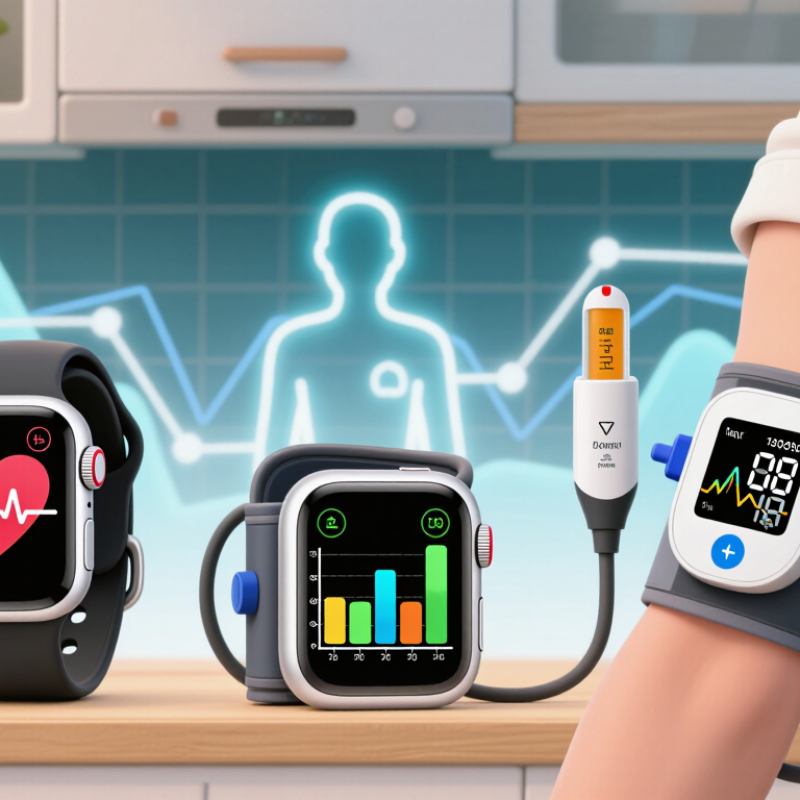
Digital health monitoring systems use connected devices and software to collect health information over time. A system may include a wrist sensor, a blood pressure cuff, a mobile application, and a secure clinical dashboard. Together, these tools can track measures such as heart rate, activity, sleep, glucose, or blood pressure. Their core functions are measurement, data storage, trend display, and sharing information with users or care teams.
Some systems send reminders or flag readings that fall outside a set range. These alerts can help people notice changes between appointments, but they are not diagnoses. A loose sensor, missed reading, or unusual day can distort a trend. For example, a cuff used over a shirt may produce an unreliable blood pressure result. Clinicians should interpret device data alongside symptoms, medical history, and validated measurements. More data is not always better. Privacy, access controls, and clear consent also matter, since health records can be sensitive.
Tips: Use devices as directed, and record context such as exercise or medication timing. Check unusual results with a reliable measurement method. If readings or symptoms cause concern, contact a qualified health professional rather than relying on an app alert alone.
Digital health monitoring systems take several forms, each collecting different kinds of information. Wearable devices track signals such as heart rate, movement, sleep, and sometimes blood oxygen levels. A wrist sensor may show how a person’s pulse changes during a walk, but it cannot explain every change. Context matters.
Remote patient monitoring systems send measurements from home to a care team. People may use a connected blood pressure cuff, thermometer, or glucose meter, depending on their health needs. Regular readings can help clinicians notice patterns between appointments. They are not a replacement for examination. A faulty reading, missed measurement, or loose cuff can distort the picture, so training and follow-up matter.
Mobile health apps often record symptoms, medication routines, activity, or mood. Some connect to wearable sensors; others rely on information entered by the user. Connected home technologies add another category, including scales and devices that detect changes in daily activity. Useful, but imperfect. A record of fewer steps might reflect illness, bad weather, or simply a broken routine. Systems work best when their data is reviewed alongside a person’s symptoms, medical history, and preferences.
| System Category | Common Measurements | Typical Devices or Setup | Potential Benefits | Important Considerations |
|---|---|---|---|---|
| Wearable activity and wellness monitors | Steps, activity duration, estimated heart rate, and sleep patterns | Wrist-worn devices, rings, or other body-worn sensors paired with an app | Can help users track habits and activity trends over time and support personal wellness goals. | Measurements are estimates and may vary by device, fit, activity, and individual. These devices are not substitutes for clinical assessment. |
| Remote patient monitoring (RPM) | Condition-specific readings such as blood pressure, weight, blood glucose, or oxygen saturation | Connected home devices that send readings to a care team or monitoring platform | May provide clinicians with readings between appointments and help identify changes that warrant follow-up. | Requires reliable device use, data transmission, and a defined process for reviewing readings and responding to alerts. |
| Blood pressure monitoring systems | Systolic and diastolic blood pressure; some devices also record pulse rate | Automated upper-arm or wrist cuff, sometimes connected to an app or care platform | Repeated home measurements can help build a record of blood pressure readings for discussion with a healthcare professional. | Correct cuff size, positioning, and measurement technique matter. A single reading does not establish a diagnosis. |
| Continuous glucose monitoring (CGM) | Glucose levels in interstitial fluid and changes over time | A small wearable sensor, typically paired with a reader or mobile app | Can show glucose trends and patterns between checks, supporting diabetes management in appropriate users. | CGM readings may differ from blood glucose, particularly when glucose is changing rapidly. Follow device instructions and clinical guidance. |
| Pulse oximetry monitoring | Estimated peripheral oxygen saturation (SpO₂) and pulse rate | Fingertip sensor or, in some settings, a wearable sensor | Can provide a convenient spot check or trend measurement when used as directed. | Readings can be affected by movement, circulation, skin temperature, nail products, and other factors. Do not rely on a reading alone to assess health. |
| Portable ECG and rhythm monitors | Electrical heart rhythm recordings, usually single-lead in portable systems | Handheld recorders, chest-worn monitors, or ECG-capable wearable devices | May capture a rhythm recording during symptoms for review by a qualified healthcare professional. | A short or single-lead recording does not detect every heart condition and is not equivalent to a full clinical ECG. |
| Sleep monitoring systems | Estimated sleep duration, timing, movement, and—in some systems—heart rate or oxygen saturation | Wearables, bedside sensors, or home sleep testing equipment | Can help users observe sleep patterns and provide contextual information for a clinical discussion. | Consumer sleep estimates are not diagnostic. Suspected sleep disorders require appropriate clinical evaluation and, when indicated, formal testing. |
Note: Digital monitoring readings can vary in accuracy and are not a replacement for professional medical advice, diagnosis, or treatment.
Digital health monitoring systems gather information through wearable sensors, home devices, and patient-entered reports. A wrist sensor may record pulse and movement every few minutes, while a connected thermometer captures a reading when used. Some systems also collect sleep patterns, blood pressure, or blood glucose measurements. The device usually converts these signals into digital records, each marked with a time and sometimes a location. Small details matter. A loose sensor or a missed measurement can make a reading less useful.
Data may travel through a phone or home hub to a secure server, where software checks its format and looks for unusual patterns. Algorithms can compare readings with a person’s usual range, but a flagged change is not a diagnosis. Context matters: exercise, stress, medication, and device placement can affect results. Clinicians may review trends alongside symptoms and medical history before deciding whether follow-up is needed. The process is not flawless. Automated alerts can be noisy, and gaps in connectivity may delay updates. Clear explanations about what is collected, who can access it, and how long it is kept help people use monitoring tools with greater confidence.
Continuous ECG produces many signal samples, while spot checks and periodic sensors collect fewer readings. Values are illustrative estimates based on the stated sampling schedules; actual collection rates vary by device and settings. ECG is shown on a logarithmic scale.
Digital health monitoring systems can collect readings such as heart rate, blood pressure, glucose levels, and sleep patterns. For patients, this can make changes easier to notice between appointments. A person managing high blood pressure, for example, may share home readings instead of relying on one clinic measurement. That context can support a more informed conversation with a clinician. It can also reduce unnecessary trips for routine check-ins. Still, a device reading is not a diagnosis. Sensors can be inaccurate, and daily numbers may vary for ordinary reasons.
Clinicians can use patient-shared trends to identify patterns that deserve follow-up. A steady change over several days may be more useful than a single reading, especially when interpreted alongside symptoms and medical history. Clear alerts can help teams prioritize outreach, but too many alerts create noise. That is a real weakness. Healthcare providers may also use monitoring data to coordinate care across visits and allocate staff time more thoughtfully. Reliable use depends on secure data handling, accessible instructions, and workflows that specify who reviews results and when. Patients need to know what a device measures, what it cannot tell them, and how to seek help when symptoms are urgent. Not every patient has stable internet access or feels comfortable using connected devices, so alternatives matter.
Choosing a digital health monitoring system starts with a clear question: what do you need to track? A person managing blood pressure may need reliable readings and easy data sharing, while someone monitoring sleep may value overnight comfort. Check that the system measures the right information and explains its accuracy. A long list of features can look impressive, but it may not suit your daily routine.
Consider how the device fits into real life. Look at comfort, battery life, setup, accessibility, and whether readings can be reviewed with a qualified health professional. Ask how your data is stored and who can access it. Monitoring tools can support conversations, but they do not replace clinical assessment. Sensors can also produce unusual readings, especially when worn incorrectly. That part is easy to underestimate.
Tips: Read the instructions before your first measurement. Keep the device clean, wear it as directed, and record readings consistently. If a result seems surprising, repeat it under the recommended conditions and discuss persistent concerns with a health professional. Simpler may be better. A system you actually use often can be more helpful than one with features you rarely open.
They may track heart rate, movement, sleep, and sometimes blood oxygen. A wrist sensor can show pulse changes during a walk. It cannot explain every change.
Home devices can send readings, such as blood pressure or temperature, to a care team. Regular measurements may reveal patterns between appointments. They do not replace an examination.
Apps may record symptoms, medication routines, activity, or mood. Some connect to sensors; others rely on details you enter yourself. Manual records can be easy to miss.
Start with what you need to track. Check measurement accuracy, comfort, battery life, setup, and data sharing. A long feature list may not suit your routine.
Yes. A loose cuff, incorrect wear, or missed measurement can distort results. Follow the instructions, and repeat a surprising reading under recommended conditions.
Ask how it is stored and who can access it. Also check whether a qualified health professional can review your readings. Details matter.
Consistent readings can make patterns easier to notice. Keep the device clean and use it as directed. Small mistakes happen.
Fewer steps might reflect illness, bad weather, or a broken routine. Activity records need context from symptoms, history, and personal preferences. The picture may stay incomplete.
Digital health monitoring systems use connected devices, software, and communication tools to track health information and help people manage care beyond the clinical setting. They include wearable sensors, home monitoring equipment, mobile health applications, and remote patient monitoring platforms. These technologies collect measurements such as heart rate, blood pressure, activity, or glucose levels, then transmit and organize the data so patients and care teams can review changes over time.
Understanding what are the benefits of digital health monitoring systems means looking at how timely information can support earlier intervention, more personalized care, and better-informed decisions. Patients may gain greater insight into their health and convenience in sharing updates, while clinicians can follow trends between appointments and identify concerns sooner. Healthcare providers may also use monitoring to coordinate care and make more efficient use of resources. When choosing and using a system, it is important to consider accuracy, ease of use, privacy, accessibility, and compatibility with clinical needs.

VetCura Medical